
Four Roses Bourbon Celebrates 135 Years
Back in 1888, Paul Jones Jr. started selling Bourbon under the Four Roses brand. 135 years later, the brand is stronger than ever, and to… Read More
Back in 1888, Paul Jones Jr. started selling Bourbon under the Four Roses brand. 135 years later, the brand is stronger than ever, and to… Read More

They have always been a family business and maybe there is nothing royal about these humble distillers of Scottish whisky, rums, and gin. So, why would they become so special, that they awarded a special Coronation whisky to the queen? On July 5, 2023, Duncan Taylor presented a special ‘coronation edition’ whisky to HM Queen […]
Colby and Ashley Frey grow all of the grains for the whiskies on their farm in Fallon, Nevada, and their latest release is the Frey… Read More
Sodade ‘Botanic Joao’ (40.8%, OB, Cabo Verde, grogue, 700 bottles, +/-2023)G. Hardy ‘Rhum Vieux XO’ (43%, OB, Martinique, agricole, +/-2023)Chateau Depaz ‘Les 100 Ans’ (45%, OB, Martinique, agricole, 1,400 bottles, 2022) Renegade ‘Etudes ? New Bacolet’…
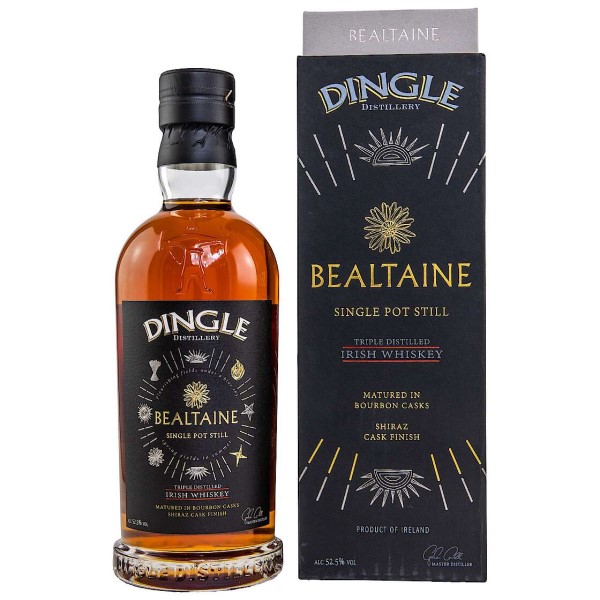
Dingke Bealtine has rolled out its 2023 Wheel of Whisky Series. The move comes with the arrival of long summer evenings and the Bealtaine fire festival. It is described by the critics as a Pot Still whiskey matured in Bourbon Casks, and finished in a Shiraz Cask. The aroma blends sundried raisins, rich dates, and […]
Jim and Jacqueline’s adventure started when Nicola and Scott dropped us both off at the Dundee Cruise Terminal where we boarded the Ambassador Cruise Ship “Ambition”. This was the start of...
thanks for reading Whisky Boys Whisky Blog…
 In the Summer of 2016, when word was received that “Pikesville Supreme Rye” would no longer be produced, it sent Maryland bar owners and citizens alike rushing to buy and stash away as many cases as possible. News stories followed in which Pikesville Rye was hailed as an iconic whiskey with a history that encompassed three centuries, first distilled by a family named Winand. Yet no one seemed to know much about the Winands. This vignette will attempt to remedy that void, as well as carry the Pikesville Rye story forward.
 The patriarch of the Winands clan was John Winand, born in Wales in 1830. His date of emigration to the United States has not been recorded. John’s first stop was in Pennsylvania where he met and married Elizabeth, three years his junior and an immigrant from Ireland. Their first child, William, would be born in Pennsylvania. By 1860, John, shown here, was recorded living in Baltimore and working as a distiller, likely employed by one of the city’s many rye whiskey makers.
At the time of the 1870 Census, the Winands could count six more children, Lewis, 12; Thomas, 10; John, 9; Mary , 7; Katie, 5; and Michael, 2. The Winands distilling dynasty was beginning to take shape. Father John clearly had been doing well as a distiller, registering a worth of $2,750 for the census, equivalent to $64,000 today. With his profits, John about 1869 bought a piece of land in a rural hamlet known as Scott’s Level, not far from Baltimore and adjacent to a community called Pikesville. There a distillery was built.

As he aged, Father John brought three of his sons into the distilling business, Louis, Thomas J.., and Michael. With his passing, Louis became the chief operating officer and the company name L. Winand & Brothers. In 1897 the Maryland state tax commissioner reported that the taxable value of distilled spirits for the year was $25,208. By 1904, production under the direction of Louis increased more than threefold as Maryland recorded a taxable value of $87,684.

Then Louis inexplicably disappeared from the scene. His younger brother Thomas was ready to step into the role of what now was known as The Winand Distilling Company. He continued the trend of ever increasing distillery output. By 1907, Maryland was charting the value of Pikesville Rye production at $130,8996. Michael was employed as company treasurer.
By the time Thomas took over the business, the distillery, shown here, had grown significantly from its origins. So had his family. In keeping with the large clan his parents had created, Thomas in June,1892, at age 32 had married Gertrude Nevins, a Maryland native ten years his junior. The couple over the next 17 years would have a family of nine children, three sons and six daughters.
 Throughout the early 1900s Pikesville Rye continued to enhance its reputation,finding a particularly strong customer base in Baltimore. With the coming of National Prohibition, Thomas and the other Winands involved with the distillery, after more than a half century of success for Pikesville Rye, were forced to shut down their distillery. Thomas retired, living long enough to see Repeal. He died in July 1951 and is buried with other Winands in a plot marked by a cross in Baltimore’s Druid Ridge Cemetery. The family is remembered in Pikesville’s environs by a street name, a school and Winands Tae Kwon Do Studio.

Here begins the second half of the Pikesville Rye story. Shut down by Prohibition, Pikesville Rye disappeared from 1920 until 1936 when a Baltimore businessman named Andrew W. Merle bought the recipe and rights. Merle did not own a distillery but contracted production out to a facility to create Pikesville Rye for him and bottle it in Maryland. Merle chose, and perhaps helped create, Standard Distillers Products, a subsidiary of The Corporation Trust Corporation. The two companies shared offices at 300 East Lombard Street in Baltimore and owned the Monumental Distillery in Lansdowne, Maryland. It had sufficient capacity to distill and bottle Pikesville Maryland Rye.

As a result, Merle was able to get his product to a growing customer demand for Pikesville Rye. Said to have been damaged by an explosion in the late 1930s, the Monumental Distillery was replaced by the Majestic Distilling Corporation of Baltimore. Shown here, that facility continued to produce Pikesville Rye until 1972 when it too went out of business. Before closing it had produced sufficient stocks of the whiskey to satisfy customer demand — chiefly from Baltimore — until 1982.
 Subsequently the brand name and recipe were sold to Heaven Hill Distillery in Bardstown, Kentucky, a move that must have raised eyebrows if not howls of outrage. An iconic Maryland rye was now being produced in Kentucky. Shame and scandal! Marylanders soon got accustomed to the idea. Pikesville Rye had joined a long list of distinguished brands that Heaven Hill managed to keep alive long after other popular pre-Prohibition whiskeys had faded from the memories of all but old timers. Sold as Pikesville Supreme, “The Aristocrat of Fine Whiskies,” and apparently made from the original recipe, this 80 proof rye continued to beguile Marylanders. Though the market was shrinking for rye whiskey, Pikesville Supreme had a solid, if modest, customer base. “We were making rye, we had rye to sell, and we had a distributor who wanted that rye in Maryland. So, we continued to service that business,” explained a Heaven Hill executive.
As time passed and tastes changed, the drinking public in Maryland, and particularly Baltimore remained passionately devoted to the original recipe Pikesville Rye, many unaware that its distribution was largely limited to the Baltimore area. The ax fell in the summer of 2016 when word came that Heaven Hill was phasing out production of the “solid, unassuming spicy yet smooth” iconic 80 proof rye in favor of a 100 proof Pikesville Rye. Cries of disbelief in Baltimore and the hoarding began.
 And so it goes. The name Pikesville continues to be seen on rye whiskeys available throughout the country but the original recipe, the one created by the Winands more than a 125 years ago and sacred to many Marylanders, is no longer sold. Given the “nine lives” of the brand, will another chapter be written before long?
Notes: This post draws on a number of sources for text and illustrations. Chief among them is an article by Andrew Zaleski that appeared in the Washington Post Magazine on January 25, 2018. John Lipman is the photographer responsible for several of the images here.


Glenburgie 27 yo 1995/2022 (57.7%, Signatory Vintage for Wu Dram Clan 3rd Anniversary, cask #6668, hogshead, 193 bottles)Glenburgie 27 yo 1995/2022 (58.4%, Lady Of The Glen, cask #6721, hogshead, 218 bottles)Glendronach 12 yo (43%, OB, sherry, 1980s)Gl…
By Tia Moskalenko For a long time, there has been a common misconception that whiskey and other forms of alcohol do not go well with cannabis products. Health professionals and weed experts alike have implored people to avoid mixing the two at any time. After abundant studies and the passing of the 2018 Farm Bill, …
In January 2023, Old Elk Distillery debuted its CASK FINISH SERIES consisting of 3 uniquely different premium cask finish labels. Located in Fort Collins, Colorado (about an hour north of Denver), the distillery has made an impressive impact on the national whiskey scene since its 2013 launch. Founded by Curt Richardson who in his previous […]
The post Old Elk Distillery’s 2023 Three Bottle Cask Finish Series first appeared on The Bourbon Review.