
Larceny Barrel Proof, C923
I’d like to thank Heaven Hill for providing this review sample with no strings attached.
…
Bourbon expert Tom Fischer provides a deeper look into the unique partnership between Mellencamp Whiskey Co, co-founded by Hud Mellencamp andLevi Collison and Hard Truth Distilling Co. Fischer chats with Master Distiller Bryan Smith about the collaboration, which involves the artistic influence of John Mellencamp, has yielded an exceptional Harvest Sweet Mash Rye. This whiskey, distilled solely from Indiana grains, is a tribute to Hoosiers, rock music, and the refined art of whiskey distillation. This initiative lends significant support to Hard Truth’s ‘Grounded in Truth’ campaign for Farm Aid.
The post Mellencamp Whiskey Co.’s Release with Hard Truth Distilling Co: Bourbon Expert Tom Fischer Talks with Master Distiller Bryan Smith first appeared on BourbonBlog.
Scotch whisky exports declined in both value and volume during the first half of 2023, according to a new report from the Scotch Whisky Association.… Read More
The 2023 Cellar Aged release blends 11- and 12-year-old bourbons bottled at cask strength, but it’s about much more than the age statement on the bottle. It’s about what’s inside.

Suntory Holdings, which owns Japanese whisky brands such as Hakushu, Hibiki and Yamazaki, will donate $70,000 to the Maui Strong Fund, Hawai’i Community Foundation, as they continue relief efforts after the devastating wildfires which decimated the town of Lahaina earlier this month. Latest estimates put the number of people killed by the wildfires at 111 […]
The post Suntory Donates To Maui Fund first appeared on Whisky Critic – Whisky Reviews & Articles – Style. Attitude. Whisky..
Following their inaugural launch of three limited-editions in April, we’re absolutely thrilled to announce that on September 27th, we’ll be teaming up with our friends at the Glasgow based Turntable Blending House, for a Tweet Tasting of their dramspan…
 It is ironic that Tennessee, a state that has its name attached to a variety of whiskeys and has given America national brands like Jack Daniels and George Dickel, also would be the state that enacted the America’s first anti-alcohol law in 1838 and, in effect, went completely “dry” in 1909 eleven years before National Prohibition. In between, through “local option,” Tennessee cities and counties banned liquor that kept liquor dealers like Will Lea moving from place to place.
Will Lea, Prohibition in Tennessee, Bristol Virginia, Bristol TennesseeWilliam Willis “Will” Lea was born in August 1855, on a farm near Nashville, the son of John and Rachel Lea. In the 1870 Census his father was listed as “farm laborer,” that, working on but not owning the land. The same census notes 18-year-old Will at the same occupation. The farm apparently was owned by a relative.
By the time of the 1880 census, Will Lea’s life had changed completely. He was married to a Nashville girl, Ida Mae Petro, had an eight-month-old daughter, and was employed as a bookkeeper in a Nashville bank. After several years passed working there, Lea evidently felt the need for a life change. Abandoning the world of finance he moved his family from Nashville 250 miles due east to Greeneville, Tennessee, the small town seat of Greene County, shown below. There in the late 1890s Lea bought and ran a saloon.

By the early 20th Century, Lea had left Greeneville and opened a liquor business 55 miles east in Bristol, Tennessee. My guess is he had been displaced by the town “going dry.” Tennessee had a local option law whereby a county or self-governing municipality by a vote of the populace could bar the making and sale of alcoholic products. Bristol, a town in two states, Tennessee and Virginia, by contrast was still “wet.”


As a result the split city was booming with saloons and liquor houses. Lea located his store first at 742 State Street and later at 644 State. There he issued a series of whiskey jugs of one and and two gallon size, each with a very simple brand: “Will Lea, Bristol, Tenn.” The situation there, however, was not free of prohibitionary activity. From June 1886 to June 1888, it was illegal to sell whiskey in Bristol, Virginia, but perfectly fine across the state line in Bristol, Tennessee.


The Temperance crowd under local option had carried the day on the Virginia side of town by a vote of 364 to 216 while the Tennessee portion remained “wet.” A tacit understanding among the prohibitionists in both states was that Bristol would ban saloons totally through a referendum the following year. When the election occurred, whiskey was voted out of Bristol, Virginia, for a second time by a substantial majority, but the proposed statewide ban was defeated in Tennessee. Liquor was still legal west of the state line. In 1888 another election was held in Bristol, Virginia, on the liquor question and by a vote of 184 to 115 the electorate decided to return again to being “wet.”

 Faced with license applications from the whiskey trade, a friendly judge ruled that under the existing statutes he was compelled to grant saloons and liquor dealers the right to do business once again on the Virginia portion of Bristol. Thus for a time, liquor was sold on both sides of State Street. This was the situation Will Lea encountered when he arrived in Bristol. The town was wide open. A photo shows a line of saloons along Main Street.
The cost of business, however, had risen steeply. Will Lea was forced to renew his licenses annually with both the city and the state. Each year the City of Bristol extracted $2,000 for retail sales, $500 for wholesale, and $3,000 for “manufacturing,” including rectifying (blending) whiskey. The state added additional charges. Lea likely was paying in fees more than $8,000 annually (equivalent to more than $200,000 in current dollars). Through these exorbitant license charges to liquor dealers like Lea, the City of Bristol raked as much as $340,000 annually (equiv. $8.5 million).

Burdened by these costs, in 1907 Lea decided that he had tired of local machinations in bifurcated Bristol and moved his liquor operation 225 miles southwest to Chattanooga, above. That city was attracting displaced “whiskey men” from all over Tennessee, a location some believed would never willingly “go dry.” In the late 19th and early 20th century, Chattanooga had more than 30 whiskey distilleries. To those could be added dozens of liquor dealers and saloons.
 So far I have been unable to find any of Lea’s jugs from this sojourn. Only one artifact, a shot glass, has come to light. Shown here, it has none of the appeal of his jugs. Lea’s time in Chattanooga was doomed to be short. Within two years, the Tennessee legislature, fully in thrall to the prohibitionists, passed a law that, in effect, put virtually all of the state’s liquor trade — saloons, dealers, and distillers — out of business. It mandated that none could operate within four miles of a school. That struck at every city in Tennessee that had not already banned alcohol through local option, Chattanooga among them.
With that blow, Lea gave up trying to operate a liquor house and with family in tow, returned to Nashville. He found employment with W. T. Hardison & Company, a real estate firm, working once again as a bookkeeper. After no more than 15 years in three Tennessee locations selling whiskey, Lea had come full circle. Lea died in April 1919 at age 64 and was interred in Nashville’s Mount Olivet Cemetery. His widow Ida followed in January 1935. They are buried side by side.
Note: It was the elegant simplicity of Will Lea’s jugs that drew me to his story of moving repeatedly. The information here was gleaned largely from genealogical sites and city directories.
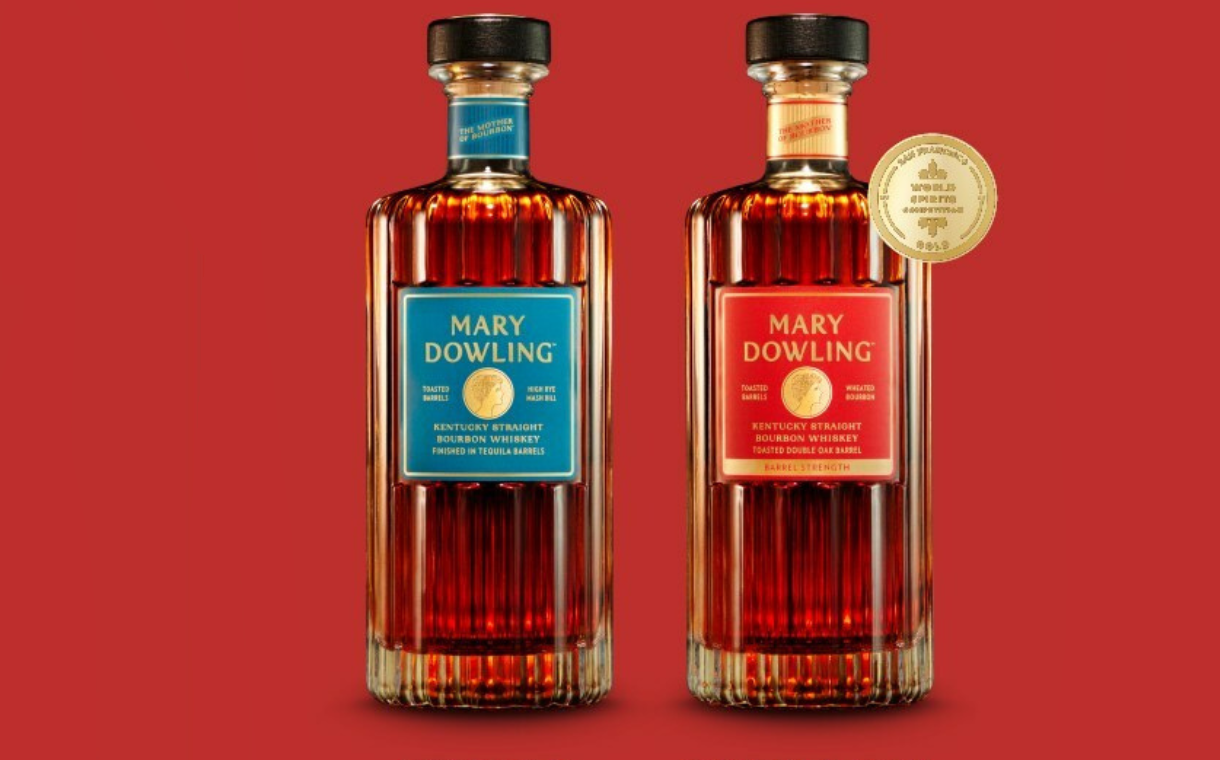
The latest whisky partnership will have Pernod Ricard distributing Mary Dowling Whisky. The agreement rolled out the first batch of a new bourbon product range. Mary Dowling is one of the few females who have dominated the normally male-orchestrated industry. Commonly known as the ‘queen of bourbon’ the distillery produces two popular whisky brands that will […]
The post Pernod Ricard Debuts Mary Dowling Whisky first appeared on Whisky Critic – Whisky Reviews & Articles – Style. Attitude. Whisky..

The bourbon boom of the last decade has seen many distilleries trying to create a consumer frenzy around their brands. But few […]
The post 423 – Would Bourbon Be Popular Without Buffalo Trace? appeared first on BOURBON PURSUIT.

