Author name: Jack Sullivan

M.E. Ingalls Left a Heritage in Cobalt


In the days before Prohibition, a few whiskey dealers sought to distinguish their spirits by offering them in ceramic jugs decorated with their names written largein cobalt applied letters.  Among them was M.A. Ingalls, whose wholesale and retail liquor house was a fixture in Little Falls, New York, for more than a quarter century.  Today Ingalls’ whiskey jugs, initially given away, can command prices of up to $1,000 or more.


Although the company letterhead indicates a founding date of 1877 the first Little Falls directory reference to Ingalls’ liquor house that I can find is 1893, located at 311 South Second Street.  The proprietor’s first efforts at obtaining whiskey jugs with his name emblazoned on them may not have been completely successful.  Below are two early efforts from Ingalls that are crudely done.  The one at left has blobs of cobalt and a distinctly amateurish look.  The larger jug at right indicates an effort to correct an earlier spelling error by writing over an errant “g” to form the Ingalls name.


Those errors seemed to end when Ingalls discovered the potteries of Ft. Edward, New York, about 90 miles northeast of Little Falls.  That town along the Hudson River had become renowned for its production of stoneware. Beginning in the 1850s several local companies produced a unique type of pottery featuring cobalt-applied lettering or designs on an off-white or brown-glazed body.  Ingalls had found the perfect containers for his whiskey.


Of the several potteries in Ft. Edward, Ingalls seemed to favor the craftsmanship of the Ottman brothers, who operated a pottery from 1872 to 1892. Their company became known for the bright, shiny quality of its cobalt lettering, applied by skilled decorators.  Shown above are two examples of the the Ottman artistry, each holding three gallons of whiskey.  Below are two smaller containers from the Ingalls liquor house, likely created by a different New York potteries.  The jug at right is particularly interesting in that it is not written in cursive script but in print type letters, a somewhat unusual format for whiskey containers of this type.


When the Ingalls jugs reached five gallon size, they were adapted to a two-handle format.  This made them easier to carry and able to be decanted by wholesale customers into smaller size containers.  The jug at left sold at auction in 2020 for just under $1,000, indicating the collector market for these pre-Prohibition vessels, all of which have attained “antique” status.  The jug identifies nearby “Herkimer” as the locality rather than Little Falls, which is in Herkimer County.


The final two five gallon examples from the Little Falls liquor house have a slightly darker outer glaze, indicating to me that they were made in a different, unidentified pottery.  Like others here their contents likely were received by the barrel from Massachusetts and nearby states, coming by rail, and then either “rectified” by the company or poured unblended into the containers exhibited here, then sold at both wholesale and retail. 


Personal details about M.A. Ingalls are hard to come by.  He appears to have avoided the 10-year census throughout his life.  More is known about his older brother, John W. Ingalls, who was involved in the whiskey trade in collaboration his sibling.  John was wed to Mary A. in 1865 and the couple appears to have had one child, Daniel, born late in their marriage. M.E. Ingalls may not have married.  Both brothers lived at 580 Garden Street, the house shown here as it looks today..


In the meantime, because each of them is a singularity given of the nature of its crafting,  the value of these whiskey jugs is sure to increase with the passing years.  Whether he anticipated it or not, M.E. Ingells left later generations a heritage in cobalt.


Notes:  Although Ingalls whiskey jugs are frequently featured on auction and sales sites, the company and its personnel largely have “flown under the radar.”.  I am hopeful that sharp-eyed descendants of the Ingells brothers will see this post and help fill in the blank spots. 


Detroit’s Olney Cook Motorized Whiskey


With the rapid rise of the automobile during the early 20th Century came a concurrent rush in  the advertising world to insert the motor car into magazine and newspaper ads as symbols of modernity.  Beer companies were quick to align their alcoholic beverages to this idea and over time I have collected dozens of their pre-Prohibition ads featuring motor cars.  Most “whiskey men” by contrast, seemingly were reluctant to identify drinking liquor with driving. A major exception was Olney B. Cook, selling whiskey in (where else) the “Motor City” — Detroit.


The saloon sign below deserves careful scrutiny.  It captures a scene, clearly not in Michigan, with high mountains, perhaps the Alps, a pine forest, a landscape filled with deep snow and a scattering of boulders.  It is a winter scene with an ice and snow-covered road that leads to an Alpine-like inn bearing a sign reading “OLCO Whiskey For Sale Here.”  Taking in the entire panorama, it might be speculated how the automobile was able to reach the tavern at such heights amid the slippery and rutted condition of the roadway. 


Now concentrate on the centerpiece of this artistic gem, the automobile, its passengers, and a waiter with a tray full of drinks.  The occupants appear heedless of the dangerous driving conditions that will face them as they motor down the mountain.  Three are eagerly reaching out for one of the glasses of whiskey being proffered by the young attendant.  Only the operator seems otherwise occupied, holding a rope of ambiguous purpose.   Does it open the driver side door?  Or engage the emergency brake?  No mind, there are four glasses on the serving tray.  The driver will get his liquor soon enough.  Moreover, the boy has brought the whiskey bottle.  Other libations presumably will follow.


Olney Cook, the liquor dealer responsible for commissioning this enthralling scene,  was a descendant of an old Colonial family that dated its coming to Massachusetts in 1643.  According to a biographer:  “A much prized relic in Mr. Cook’s possession is the Cook Coat-of Arms, brought to this country by his ancestor, Walter Cook in the seventeen century.”  Olney also could claim kinship with slain President James Garfield and Gen. Cyrus B. Comstock, senior aide-de-camp to Gen. Ulysses S. Grant. 


One of ten children, Olney Ballou Cook was born in 1837 to Marinda Thayer and Fenner Cook, a farmer.  He received an elite education for the times, first at the local elementary schools in Mendon, Massachussetts, and later attending a secondary boarding school for boys at Westminster, Vermont.  Apparently not attracted to farm life, in 1857 Olney at age 20 took the opportunity offered him by an uncle, Colonel Levi Cook, to come west to Detroit, Michigan, where his kinsman was a well-known figure, shown here, having served in numerous public positions including three terms as mayor of the rapidly growing city.


Levi Cook also owned a general merchandise store in Detroit where he employed his young nephew.  Olney proved to be a quick learner and the importance of liquor sales at Uncle Levi’s establishment particularly caught his fancy.  After 14 years working for others, in 1871 Olney struck out on his own opening a wholesale liquor store on Detroit’s major commercial street, Jefferson Avenue.  He called his enterprise “O.B. Cook & Co.”


Olney’s move may have been triggered by his marriage in August,1866.  His bride was Vashti T. Goldsmith, from a distinguished Detroit family who claimed kinship with New York governor George Clinton and General William Belknap, Secretary of War under President Ulysses S. Grant.   A biographer noted a difference in religious affiliation between the couple.  Vashti was a staunch Presbyterian; Olney an adherent of the more liberal — and non-Prohibitionist —Universalist Church.  The couple would go on to have three children, daughter Alma, and sons Charles and James.


Cook appears to have met with quick success as a liquor dealer.  A wholesaler, he was selling his whiskey in four and five gallon jugs to the saloons, hotels and restaurants in his customer base.  He also was a “rectifier,” blending whiskeys distilled elsewhere to achieve particular characteristics, then bottling and labeling them as proprietary brands.  He was drawing liquor from the warehouses of J. B. Wathen & Brother distillery of Jefferson County, Kentucky, and the R.P. Pepper distillery, Louisville. [See post on Wathen, Aug. 1, 2020.]


The transplanted Yankee sold his own proprietary brands both at wholesale and retail.  They included “Export Brand Whiskey,” “Knickerbocker Whiskey,” “Del Monte Whiskey,” “Vallonia Whiskey,”, and “Yankee Rye.” OLCO Whiskey was his flagship label, obviously standing for OLney COok.  He never bothered to register any of these names for trademark protection.  Cook issued shot glasses for most of his brands, examples to be found throughout this post.  Shown here is his back-of-the-bar bottle for OLCO.


His success rapidly advanced Cook’s reputation in the commercial centers of Detroit.  Noted his biographer:  “Through persistency and a fixed determination to forge ahead Mr. Cook has succeeded in building up a fine business enterprise and he holds prestige as one of the foremost businessman of Detroit….”  Interestingly, nowhere in Cook’s two page profile does the biographer mention the source of his wealth and prestige — selling liquor.


Cook for many years also was secretary-treasurer of  the Allouez Mine in Michigan’s Upper Peninsula, shown here.  This mining operation, extant from 1869 to 1923, was aimed at tapping the riches of the Allouez Conglomerate Lode, porous rocks containing agates, quartz, calcite, and other valuable minerals.  He also was a founding member of the “Old Club,” a boating and country club located on Lake St. Claire, below.


As he aged, Cook brought his son James into the business.  Although the young man, shown here, demonstrated an affinity for the trade, his father into his 70s continued to be active in managing what had become a large liquor house.  Cook died in December 1916 and was buried in Detroit’s Woodmere Cemetery, Section 1A, Lot 765.  His widow, Vashti, joined him there 21 years later having lived to be 96 years old.   Son James guided the fortunes of the liquor house his father had built for the remaining few years until shut down by Prohibition. 


As for Olney Cook, the last word here is left to a biographer writing in 1888:   “He is a fine old man and his life history is certainly worth of commendation and emulation, for along honorable and straightforward lines he has won success which crowns his efforts and which makes him one of the substantial residents of Detroit.”  To which I would add:  A man whose melding of drinking and driving in a saloon sign stands virtually alone in its audacity.


Note:  Key to telling the story of Olney Cook is his extensive biography in the 1888 volume entitled “History and Geneology of the Ballous in America,” compiled and edited by Adin Ballou, available on the Internet. The material there has been augmented by information on ancestry.com, Find a Grave and other websites.


Convicted Killer Edward Stokes and His Famous Barroom

In the Winter of 1873, a convicted murderer languished inside New York City’s well named prison, “The Tombs,” contemplating his hanging scheduled for February 28.  Eight years later this same man bought a controlling interest in an elite Manhattan hotel called the Hoffman House, made it famous for its barroom, and thereby generated whiskey brands across America.  His name was Edward S. Stokes and his story is the stuff of novels.

Edward was born in Philadelphia on April 27, 1840, the son of Nancy Stiles and Edward H. Stokes, a wealthy New York cloth manufacturer who retired at an early age and moved to Pennsylvania.  He was able to give his son an excellent education and when the boy showed strong signs of business acumen, a start in business, manufacturing and selling cheese.


Cheese proved to be just an appetizer.  By the time Stokes was 25 he was operating an oil refinery in Brooklyn.  This brought him in close contact with Jim Fisk, the personification of a late 19th Century “robber baron.” Fisk gained wealth and notoriety manipulating gold and railroad stocks on Wall Street. Never shy about broadcasting his money,  Fisk strolled Manhattan streets in elaborate uniforms with perfumed hair, waxed mustache, and fingers adorned with diamonds. 


Fisk saw the potential in Stokes and became a “silent partner” in the oil business.  Together they had a secret arrangement to discount refinery freight charges by the Erie Railroad, a line Fisk controlled.  Their collaboration foundered in the late 1860s as the two men vied for the affections of the same woman, femme fatale Helen Josephine “Josie” Mansfield.


Shown here, Josie was living in New York after she divorced her husband.  Impoverished and unable to find work, she frequented the hospitality of a friend who ran a brothel on 34th Street. There she met Fisk, whose young wife is said to have tolerated his extramarital affairs.  Smitten with Josie, Fisk showered her with money and gifts, buying her an elegant brownstone at 18 West 24th Street.  Josie also had attracted the attention of Stokes who, in contrast to the portly middle-aged Fisk, was slender, young, handsome and single.


Catching wind of this competitor, Fisk arranged to have Stokes arrested for allegedly embezzling funds from the refinery. He also seized the refinery and obtained injunctions to prevent Stokes and his mother, who owned the site, from entering the premises. The charges were dismissed and Stokes was later awarded $10,000 compensation, but was still deeply angry.  He threatened to publish Fisk’s love letters to Josie unless he was paid substantially more.  The older man screamed “blackmail,” obtained an injunction to prevent publication, and arranged a New York grand jury indictment of Stokes and Josie. By now thoroughly estranged from Fisk, Josie countersued claiming libel. Stokes, now her lover, was her principal witness.  The case was heard on January 6, 1872.


The date proved to be a fateful one.  That evening as Fisk entered Grand Central Hotel and began to ascend the stairs, he met Stokes coming down.  Stokes later claimed that Fisk drew a pistol and that believing Fisk intended to kill him, he drew his own pistol and shot Fisk twice. One bullet passed through Fisk’s arm and the other penetrated his abdomen, causing a mortal wound.  The tycoon died at 10:45 a. m. the following day.  The killing made front page news all over America.


Three trials ensued.  When a gun was found in Fisk’s vicinity, a first trial ended in a hung jury, seven to five for conviction.  Six months later a second jury found Stokes guilty of first degree murder and he was sentenced to be hanged.  As he waited on death row, upon a petition by his family the New York Court of Appeals granted Stokes a stay of execution and a new trial.  This time, with additional evidence produced by the defense, Stokes was found guilty only of manslaughter in the third degree.  The judge, critical of the jury verdict, said to Stokes:  “The sentence of the Court is that you be imprisoned in the State Prison at Sing Sing at hard labor for the term of four years.”


Stokes was released from prison in 1876 after serving three years.  Still only 36 years old, he embarked on an entirely new career.  Before his incarceration, he had lived in the Hoffman House Hotel, located at the corner of Twenty-fifth Street and Broadway. The proprietor had befriended Stokes during his trial and after his release sold him a controlling interest in the hotel.  For Stokes it was a new beginning. He made the most of it, building a national reputation around the hotel barroom.


Under Stokes guidance, the Hoffman House became famous for its paintings and sculptures, many displaying the nude female body.  Of those the most renowned was a large oil painting entitled “Nymphs and Satyr” by William-Adolphe Bouguereau.  First exhibited at the 1873 Paris Salon, it depicts three starkly nude young females cavorting around a goat-like satyr.  As shown right in the illustration below, Stokes made it the centerpiece of the Hoffman House barroom. 


In June 1877, Bougereau wrote Stokes imploring him to send the painting back  to be shown at the 1878 Paris Exposition as the artist considered it “the most notable feature of my future exhibitions.”  There is no indication Stokes complied. The painting had become a valuable tourist attraction.  According to one account:  “People lined up and crowds gathered to catch a glimpse of the titillating image. Magazines covered the story. The bar room painting set a trend, as hotels and bars in Chicago and San Francisco followed suit, exhibiting their own classical nudes.”


Recognizing that he had hit on a winning strategy, Stokes  surrounded this prize with other European artworks with an emphasis on nudity.  Shown above left is a statue entitled “Pan and Bachanti”  by Schlessinger, a first prize winner at the 1878 Paris show.  It can be glimpsed at the back of the barroom illustration.   Another was a statue  from the 1881 Exposition celebrating “Eve,” obviously before the unpleasantness over an apple.


Stokes included a number of those artworks in an 1885 brochure that bore his name.  The document includes this description of the by now-famous Hoffman House Bar:  “A few steps carry us to the threshold and there for a moment a visitor may pause, as he contemplates the magnificence of an establishment the praises of which have been sung in the Old World and the New.  A place that but for its convivial suggestiveness and atmosphere of good fellowship, might be mistaken for a cabinet of curiousities or a boudoir of art.” 


 The illustration below shows the extent of the barroom, said to be a place of  “gathering of New York’s socialites, actors, businessmen, and other wealthy men.” (Women were not allowed.)  Edward Stokes, a man who once had languished on “death row” had now achieved the pinnacle of recognition in “The Big Apple.”


Not only did Hoffman House set a trend for displaying classical nudes in U.S. drinking establishments, brands of whiskey that referenced the famous hotel proliferated across America. Three were in New York City.  The most prominent was Cook & Bernheimer Co., a New York liquor wholesaler that distributed its whiskey nationally from 1863 until 1917. Boasting branch offices from coast to coast, this firm may have had a licensing agreement with Stokes. Two other Gotham houses marketed their own brands.  Phelan and Duval, founded in 1870 by James J. Phalen and George Duval featured a whiskey they called “The Hoffman Special.”  The I. Solomon Company featured “The Famous Hoffman House Pure Rye.”


In the hinterland other liquor purveyors were quick to assume the Hoffman House mantle.  The most aggressive of these was the Hamburger Company of Chicago.  It not only captured the the hotel name but, as shown below, featured the Bougereau painting in its advertising and labels.


In Cincinnati, H. F. Corbin used the hotel name on its whiskey jugs large and small.  Nearby in Cincinnati, Isaac Michelson & Bro. liquor house featured a whiskey they called “Hoffman House Bouquet.”  An associated company in Austin, Texas, run by a third Michelson brother, advertised the same brand as well as Hoffman House Cigars.  Finally, in Milwaukee, Herman Toser, possibly afraid of trademark infringement, marketed Hoffmann (extra “n”) House Whiskey.


I can find no evidence that Stokes ever challenged the use of the Hoffman House name on any of these products.  He may well have believed that they helped publicize his New York hotel and drew customers to its doors.  For all his success as a hotel owner, Stokes became known for his bad temper.  He often quarreled with business associates and relatives alike, even resorting to court action against individuals who had helped him during and after his incarceration.  


Stokes died in New York City in November 1901 at age 60 and was buried at Greenwood Cemetery in Brooklyn.  Meanwhile Josie Mansfield, having broken off her affair with Stokes,  decamped to Europe, married again and was divorced four years later.  She died of stomach cancer in Paris in 1931 at the age of 83 and is buried in a Parisian cemetery next to her mother.


Notes:  This post was compiled from a number of online sources, including Wikipedia entries on Stokes, Fisk and Mansfield.  A detailed account of Stokes shooting Fisk was provided from a 1910 story by Thomas Duke in his “Celebrated Criminal Cases of America.”  Longer accounts of three whiskey men who issued Hoffman House labels may be found elsewhere on this website:  Cook & Bernheimer, November 7, 2016;  Michelson Bros., April 11, 2015; and Herman Toser, January 1, 2014.


Risqué Whiskey: North and South Exposure

Noting that a prior post on risqué whiskey advertising has proved popular (May 25, 2023) I am emboldened to present a second post that presents the kind of “naughty” pictures meant to entice pre-Prohibition men to purchase a specific brand of whiskey.  As the title here suggests, such images were produced all over America.


This first is from Richmond, Virginia, the capitol of the Confederacy.  The very young lady shown lifting her skirt advertises “Deep Run Hunt Club Pure Rye” on a deck of playing cards.  This was a brand from E. A. Saunders & Son Company, who provided the Southland with wholesale liquor, tobacco, and grocery items via the elaborate railroad network that linked Richmond to southern states.  Rectifiers of at least four brands of whiskey, the Saunders family sold their liquor interests to Richmond’s Phil G. Kelly in 1905 after 20 years in business and opened a local grocery store.


The second skirt-lifting girl is one of several trade card images from an outfit that featured “Old Maryland Dutch Whiskies.”  My efforts to track down the company behind the brand have proved fruitless.  Particularly intriguing about this advertising were the slogans for Old Maryland Dutch:  “The Purest Stimulant in Existence” and “When not taken immoderately, there will be an entire absence of Nervous Prostration.”   This brand also was “Emphatically ‘The Whiskies of Our Daddies.”  One imagines daddies might well be prone to “nervous prostration” if their daughters ran around like the one shown here.


Dreyfus & Weil, Paducah, Kentucky, distillers provided a somewhat more suggestive trade card of young women, in this case dancers, raising up their skirts while three bonafide “dirty old men” take a long look.  Sam H. Dreyfuss and his partner regularly were excoriated in the press for the sexual images they presented in their merchandising.  Their “Devil’s Island Endurance Gin,” sold with suggestive advertising was accused by critics of having been instrumental in rapes and even one murder.


From lifted skirts to bared bosoms, we head west to San Francisco where Roth & Company had trademarked “Capitol O.K. Whiskey” in 1906.  Its saloon sign depicted an underwater topless beauty.  Joseph Roth founded this firm in 1859, initially located in the old U.S. Courthouse near Oregon Street.   After working with several partners over the years, Roth died in 1891 and the firm in 1906 was bought by Edwin Scheeling and his wife.  The earthquake and fire that year destroyed the premises but the Scheelings rebuilt and the business survived until the arrival of National Prohibition. 


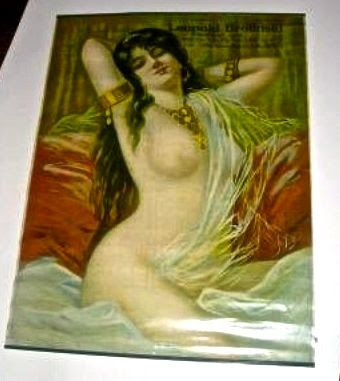
Other popular advertising gimmicks were calendars.  They might be hung up in a drinking establishment or more cautiously in a customer’s “man cave.”  This beauty graced a calendar issued by the Brolinski Saloon of Niagara Falls, New York, likely given out to the boys along the bar.  Brolinski likely bought this image from a catalogue and personalized it by having his name and address attached.  The lady involved was clearly a Middle Eastern harem dweller, a popular exotic image of the pre-Pro era.


Also popular were representations of Greek goddesses in various states of undress.  They are found on a number of whiskey advertising items, including signs, trade cards, celluloid pocket mirrors and, as in this case, paperweights.  The weight above shows Diana, the goddess of the hunt, in a forest setting with her bow in hand and half-clothed in something filmy.  She has just fired an arrow, likely into a deer offstage.  The item was issued by the Fleischmann Company, famous for yeast, but also a major producer of whiskey under a number of brand names. 


Another lass clothed only in gauze is somewhat inexplicably holding onto a horse in this trade card.  She may, however, be what one Milwaukee liquor dealer thought Lady Godiva might look like.  He was A. M. Bloch who founded his enterprise in 1877. Over the thirty years of its existence Bloch’s firm was located at several addresses on the city’s Water Street, where many of its liquor emporiums were located.  Although not mentioned on this ad, Bloch’s flagship brand was “Joker Club.”  


Even staid Boston could spawn a risqué image, this one from Felton & Son, founded by F. L. Felton and located in South Boston.  The company house brands were “Felton Rye,” “Old Felton Rye,” and “Felton’s New England Rum,” the latter the excuse for this tantalizing saloon reverse glass sign.  The Feltons were distillers and known most particularly for their rum, advertised as“…Unsurpassed by any in the market, is warranted copper distilled, perfectly pure….   Would the Feltons, I wonder, have vouched for the “perfect purity” of the nude on their sign?


.


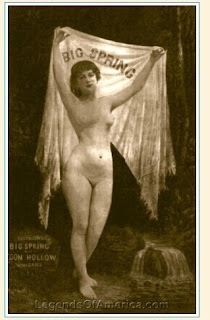
At this point, all modesty has flown away.  Whatever covering this nude may have had is now held above her head, advertising “Big Spring” whiskey.  This sweetie was brought to the public by the infamous “Whiskey Trust,” an attempt to create a monopoly in the whiskey trade in order to drive up prices.  Located in Louisville, the organization officially was known as the Kentucky Distilleries & Warehouse Company.  More successful than other similar attempts at combining distilleries the Kentucky outfit operated from 1902 to 1919, buying or spawning more than a dozen brands, but it never achieved its profit goals. 


The invention of celluloid made possible a variety of liquor-related advertising items that retain their appeal even a century or more later.  The shapely female shown on this match safe is a excellent example of celluloid art, even though it is difficult to understand why light is shining from the palms of her hands.  This interesting image was brought to the drinking public by Herman Frech, a pre-Prohibition Minneapolis liquor dealer, located at 14-16 North Sixth Street.   His logo, unseen here, appears on the opposite side. It presents his name, a whiskey bottle, two glasses and a box of cigars.


If one nude sells whiskey, hey — why not try three?  That may have motivated B.S. Flersheim to issue a trio of nudes on a saloon sign advertising his mercantile company in Kansas City, Missouri.  The sign, that sold in 2019 for $37,000,  displays the unclad ladies visiting a gent sitting in an easy chair and quaffing a brand of whisky aptly named, “Its Tempting.”  That label was trademarked in 1904.  Another B.S. Flersheim & Company brand was “Old Bondage.”  Its use on this sign would have been really kinky.  Founded in 1879, Flersheim’ liquor business survived until 1918, a 37 year run.

There they are risqué whiskey fans.  A dozen females in various stages of dress and undress.  They were issued all over the country, from reputedly stogy places like Boston and Milwaukee to more exciting locales like San Francisco and Niagara Falls.  These images all had the same purpose:  to sell whiskey.  Moreover, they all faced the same fate:  Banishment to the ranks of collectibles once women begin to frequent drinking establishments.


Note:  Longer vignettes on two of the “whiskey men” noted in this post are to be found elsewhere on this website:  David Sachs, October 25, 2011, and Dreyfuss & Weil, March 1, 2013. 


Tom Holland and Denver’s“Knockout” Saloon

Foreword:   Every bottle has a story, so it is said, and behind the flask at right is the account of a Denver saloonkeeper as described in Denver Times stories in July 1901 and  a year later in July 1902, more than a century ago.  Initially unearthed by John Eatwell in 2005  for an article for the pages of Bottles & Extras magazine, the newspaper account deserves being reprised here because of the light it shines on the political clout of a saloonkeeper in early Twentieth Century Denver.

Tom Holland, saloonkeeper was sentenced to the penitentiary for a term of five to ten years at hard labor by Judge Booth Malone this morning:  “The crime of which the jury have found you guilty and for which you now stand convicted before the bar of justice, is one which, while altogether too common in this community, is unmanly and not at all to your credit.  You open your place of business, invite the public to patronize you, and then, taking advantage of your neighbors and patrons, you proceed to drug and rob them, then threw them out in the streets and alleys, perhaps to die.”


Judge Malone delivered his sentence, saying:  “This crime is not only a treacherous one, but full of danger to human life and that brings disrepute to the fair name of your city and community.  It reflects most seriously upon the reputation of the city but upon the administration of the law when a crime like this cannot only occur again and again, but when upon one of the principal thoroughfares of the city, in the very heart of the business center, it is time this “knockout drop” business was stopped.”


“It is extremely fortunate for you that you are not today standing before the court to be sentenced for murder instead of larceny from the person.  I do not understand why you permitted yourself to so mean and dangerous a crime.  You were not hungry, nor were you braving danger and defying the law to feed a starving family.  You were reported to be a man of means and of some influence, not only among men of your own calling, but in certain political and other walks of life.  You may have presumed upon that influence, or you may have been encouraged by the unbridled or unpunished spirit of lawlessness that has already  too long been riding roughshod and rampant in the community.”


“The judgment of the court is that you , Thomas Holland, are guilty of the crime of larceny from the person, as found by the verdict of the jury, and the sentence of the court is that you be confined in the state penitentiary of the state of Colorado, at hard labor, for a period of not less than five, nor more than ten years.”


Colorado State Penitentiary


Holland’s face was pale as he listened to the scathing words of the court.  The sentence of five years of hard labor almost unnerved the man.  As he sat down with the walls of the prison staring at him, a slight moisture gathered about his eyes, but he said nothing.  


A Year Later:  Springing Thomas Holland

One year ago, Judge Booth M. Malone of the district court announced from the bench that it was time for the “knockout business” in Denver to cease operations, and he proceeded to deliver a dose of drops strong enough to put a notorious knockout offender out of commission for ten years.


Judge Malone’s action was taken after a careful examination of the case under consideration, having heard all the testimony and arguments on both sides.  After an ex-parte examination, the state board of pardons has prescribed as an antidote for Judge Malone’s medicine.  The verdict of a jury, the sentence of the district court and the ruling of the supreme court are nullified by the decision of the board of pardons, and the knockout venders may resume business at the old stand.


Governor Orman will probably pardon Thomas Holland who is serving time at Canon City for a despicable crime.  As a member of the board of pardons, James B. Orman has recommended to Governor Orman that Holland be released from the penitentiary.  In his executive capacity the governor cannot consistently ignore the request made by himself to his advisory capacity.  With characteristic evasion of responsibility the governor will say:  “Really I have not had the time to examine the case, but I assume that the board has given it careful consideration, and I suppose I must accept the board’s findings.  Honestly. could you expect me to do otherwise?”


Tom Holland conducted a disreputable saloon in a most respectable portion of the city — in the heart of the business center of Denver.  His place was a rendezvous for well dressed rascals and was headquarters for “repeaters” on election day.  He was a power in ward politics and his pull afforded him protection.  One day he overreached himself and committed a crime so flagrant that it could not be passed without notice.  He was given a fair trial and in spite of all influences and legal ability used in his behalf, he was convicted.  Arguments were submitted for a new trial, which was denied, and the supreme court refused to intrfere.  He was given every opportunity to establish his innocence.  His was not the case of a poor and friendless man rushed to prison because he lacked means for defense.


A Politically Engineered Release

The release of the notorious Thomas Holland, mixer of knockout cocktails and fixer of elections, in general [is] condemned to this community, for his guilt was thoroughly established at his trial and no new evidence had been presented to show his innocence.  Holland’s pardon was due to political influences, and was not an act of justice to an innocent man, or of clemency to a deserving one.  Holland was a power in ward politics before his conviction, and so many politicians were under obligations to him that his pull was not broken when the doors of the state prison closed behind him.  A new campaign is about to open and the governor needs assistance.  Holland had proved himself to be a valuable political worker, but as Convict No. 5204, his services would have been unavailable.


The evil of such pardons is not so much in the release of the individual criminal as in its effect on the wrongdoers.  It is possible Tom Holland will hereinafter be careful not to get tangled up in the meshes of the law.  He will probably confine his bartending to serving drinks, without a dash of knockout bitters in them.  But the object of the law is not simply to punish the individual offenders or to reform him.  It is also to furnish example to others of his class.  When the law is nullified, the exemplary effect is destroyed.


In the Holland pardon, the governor has notified the dive keepers that they have license to resume their disreputable methods, provided they render sufficient political service.  Their freedom depends not upon their good conduct but upon their political efficiency.


Holland Generated Democratic Votes

Thomas Holland was recommended for executive clemency by the board of pardons at the request of numerous democratic politicians.  Holland’s place has for years been one of the most notorious resorts in the city for the repeatees and ballot box stuffers. It was from his place that repeatees were out in droves in the last city election to cast illegal ballots and corrupt the elections.  A large number of ward politicians appeared before the governor to plead for Holland’s pardon.


Judge Booth Malone sent a letter, which, while not declaring it in behalf in the man’s innocence, left it discretionary with the board to judge if Holland ought to be set at liberty.  Another election is approaching and the outlook is not very bright for the party, which always depends on Holland’s saloon to do its share in electing a ticket and his services were again needed, hence the pardon.


Petitioners for Holland’s Release

There is great public interest in the names of the persons wh have been instrumental in setting Holland at liberty.  Among those who petitioned for Holland’s release were five from district court, two assessors, one county clerk and recorder, five county commissioners, one sheriff and a number of businessmen.  Besides these were about 100 signatures of private individuals unknown to the general public.


A second petition came from the democratic office holders at the police station, including the chief of police, captain of detectives, under sheriff, state oil inspector, and many others along with 50 names of persons not well known.


Then there were a large number of men who went to the trouble of writing or signing personal letters to the governor or the board of pardons.  Among them were Holland’s family physician, a manufacturer, a cigar maker, a doctor, a paper dealer, an auctioneer, a bank cashier, a liquor dealer (Ed Lewin), the Zang Brewing Co., the warden of the penitentiary and finally came a communication signed by the ten jurors who could be reached.  Many of the personal letters were identical in contents, showing they had been prepared by one person and signatures applied to them.(END)


Note:  Shown here is an illustration of the Denver Times, a daily newspaper that operated from 1872 to 1926 when it merged with the Rocky Mountain News. The illustration of the Holland flask and the cartoon are from John Eatwell’s original article.  The other images have come from Internet sources.  My vignette on Ed Lewin may be found on this website at May 13, 2018.  A post about another Denver saloonkeeper, Wolfe Londoner, and his controversial election as the city’s mayor ran here on November 26, 2017.


Dr. Seuss Sells the Sauce


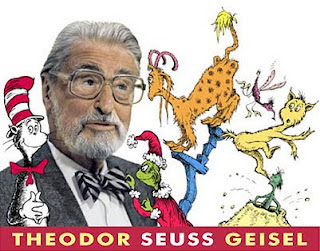
I am a fan of the Dr. Seuss books, from “Cat in a Hat” to “Horton Hears a Hoo” and beyond — books read to my sons when they were tots.  Unknown to me then was that their author, Theodor Seuss Geisel, earlier had created captivating advertisements for whiskey and beer among dozens of artworks for commercial purposes.


Geisel came from a family of brewers. His grandfather owned the Kalmbach and Geisel Brewery in Springfield, Mass. In 1894 it was renamed the Highland Brewery and five years later became part of the Springfield Brewery. In 1919, on the very day his father became president of the company, Prohibition was voted and eventually forced the brewery to close. Geisel never forgot the financial loss and trauma this event caused his family.


Geisel’s 1942 anti-Prohibition cartoon above was occasioned by a bill in Congress to lower the draft age that included a rider that would have outlawed the sale of liquor in areas adjacent to military installations. The opposition position, shared by Geisel, was that many liquor stores in wartime America were near some kind of military site. This threat occasioned the cartoon referencing the long dead Prohibition stalwart, Carrie Nation, riding on a characteristically Dr. Seuss camel.  The measure failed.


The artist’s first foray into alcoholic beverages occurred in 1937 when he was commissioned to do a series of ads for Schaefer Beer. A New York City brewery, the F & M Schaefer Company had been founded in 1842 by brothers from Wetzlar, Germany. The brewery survived Prohibition and at one point in the 1950s Schaefer was reputed to be the largest selling beer in the world. Geisel was hired to give a lively image to Schaefer’s bock beer, a dark malty seasonal beverage that typically is available in March and April.


Because “bock” is also the word for goat in German, the brew often is depicted with that image. In keeping with this tradition, Geisel used a typically Seussian-looking mountain goat for his ad. In one illustration, the goat is a trophy animal who is looking enviously off the wall at two glasses of beer passing by. In another, the goat is a waiter carrying a foaming schooner on a tray.


Noting his distinctive work for Schaefer, in 1942 the Narragansett Brewing Company, located in Cranston, Rhode Island, asked Geisel to undertake an ad campaign for its beer. The president, Rudolph F. Haffenreffer, was a avid collector of Native American artifacts including cigar store Indians. Haffenreffer asked Geisel to weave a wooden Indian theme into his advertising.


Thus was born “Chief Gansett,” a blocky figure wearing beads, carrying a hatchet and boasting a multicolored headdress. Most often this wooden Indian carried a large goblet of beer. The image proved very popular and the Chief appeared on a range of marketing items including trays, bar coasters, and posters as well as in newspaper and magazine ads. In an ad for bock beer, Chief Gansett also was depicted riding on an animal that bore a strong resemblance to the goat Geisel earlier had drawn for Schaefer Beer.


When a small Scotch distillery in 1939 called Hankey Bannister decided to advertise in the U.S. market, it sought a special image that would make its bottles distinctive on the shelves of American bars and liquor stores. Founded in 1757, this wines & spirits company established its premises at Johns Street in London’s West End.  Given the distillery assignment, Geisel created the “Hankey Bird,” an absurd looking avian with a large beak and wearing a kilt. With the use of a small spring, the figure snapped onto the neck of a bottle of Hankey Bannister Scotch. It brought instant attention to the whiskey.  Sales soared.


With tongue firmly in cheek, Geisel wrote in 1939:  ”There’s no sense to it.“The bird on the bottle is a replica of an actual bird, developed after years of painstaking cross-breeding in the Seuss Laboratories for a lofty purpose, namely, to produce a carrier pigeon for the Scottish army… a bird so distinctive that it would not be mistaken for a grouse and shot down by near-sighted American millionaires. After fifteen generations of wearing kilts, the Hankey Bird has developed sideburns. But most unfortunately his mating call is characterized by a distinct burr. Our only purpose in leasing him to Hankey Bannister is to finance further scientific effort to de-burr that mating call…not, I assure you, to aid in the crass business of selling whiskey.”


Throughout his career Ted Geisel as Dr. Seuss had written and drawn for youngsters. In 1957, however, he published two remarkable books that sent his reputation into the stratosphere, “Cat in a Hat” and “The Grinch Who Stole Christmas.” Thereafter he was able to abandon commercial work entirely to concentrate on children’s literature. While generations forward may be thankful for that, a look back is instructive to the time when Dr. Seuss “sold the sauce” and a whole lot of other things through his art. 


Note:  Those early Geisal drawings lovingly have been gathered by Dr. Charles D. Cohen, a Springfield Mass. dentist, in a marvelous book called “Seuss, the Whole Seuss and Nothing But the Seuss.” It is a must read for any Dr. Seuss aficionado.


Atlanta’s 1st Mayor: “Whiskey Man” Moses Formwalt

As their candidate for the first mayor of Atlanta, Georgia, Moses Formwalt was a natural for a local political party that called itself “Free & Rowdy.”  A tinsmith who fashioned distilling apparatus and owned a highly successful saloon, he was a leading citizen of the newly incorporated city.  Elected in 1848 for a one year term and soon after suffering an untimely death, Formwalt rightly has remained enshrined in Atlanta’s memory.

Format’s origins were hardly propitious.  His father, John Formwalt was born in Lancaster County, Pennsylvania in 1774, two years before the American Revolution, from a family of sturdy Presbyterian stock.  By the age of 20 John had married a local girl named Margaret Elizabeth Kerr, age 15, and moved west to Knoxville, Tennessee.  Born in 1820 Moses Formwalt was never to know his father.  At 46, while Moses was still “in utero,” John died, leaving Margaret with three children.  His mother died when Moses was 10, relegating him to be raised by older siblings.


When he reached 16, the young Formwalt struck out on his own.  In 1836 he moved to Decatur, Georgia, almost 220 miles directly south of Knoxville.  There he appears to have learned and practiced tin and copper smithing with a specialized talent for crafting distillery equipment.  By 1846 he had moved to nearby, newly named Atlanta that was growing fast as the terminus point of the Western and Atlantic Railroad.  Formwalt found a ready market for his pot stills and in 1847 was able to open a saloon of his own on Decatur Street, perhaps the one shown below.  His establishment proved popular with residents and the proprietor rapidly grew in wealth and prominence. 


By 1850 the city of 2,500 boasted 40 saloons. Unlike the pre-Civil War “Gone with the Wind” view of Atlanta as one of Southern charm and cultivated manners, the town more resembled the Wild West, as suggested in the contemporary cartoon below.  Sections of Atlanta were infamous as hangouts for thieves, gamblers, prostitutes and hoodlums.  Shady characters inhabited areas known as Slab Town and Murrell’s Row — the latter named for a notorious gang leader and murderer.


When Atlanta incorporated and set its initial mayoral elections. two political parties emerged although voting was non-partisan.  One was the “Free and Rowdy” Party.   The adherents, called Rowdies included the owners of Atlanta’s proliferating distilleries, saloons, and brothels who represented a major voting bloc. They favored keeping Atlanta a “wide open” town. The opposition called itself the “Moral Party.” It ran on a law and order platform aimed at eliminating vice and curbing liquor sales.  For the initial mayoral election the Free and Rowdies chose the popular and prosperous Moses Formwalt;  the Moralists picked Jonathan Norcross, a New Englander who owned a sawmill.


The 1847 election was fiercely contested although only 215 votes were cast—women and people of color not allowed. Artist Wilbur Kurtz painted the scene at one polling place, Thomas Kile’s Grocery, where activity is depicted as brisk.  Sixty election-related fist fights are said to have occurred during the day.  When the votes were counted, Formwalt had won the one year term as Atlanta’s first mayor.


The “whiskey man’s” term in office was well documented in a record kept by James E. Williams, a subsequent mayor.  Formwalt’s term was marked by modest progress.  A board of health was chosen, new streets were opened, and a bridge across a stream on Hunter Street was widened and raised.  On a curious note, in April 1848 Norcross and another man were charged with disorderly conduct of an unspecified nature at a city meeting.  The other man was fined $10; the charges against Norcross were dropped.


The Formwalt’s office apparently included some judicial powers.  According to a May 1906 article in the Atlanta Constitution, the city’s first police officer, German Lester, shown here in a newspaper photo, was: “A good marshal, brave man, faithfully performed his duties as circumstances would permit.  Often he would arrest violators of the law and carry them before the mayor, who would discharge them, when really they should have been heavily punished.”


Two years before his election the 28-year-old Formwalt had married.  His bride was Elizabeth Ann Bell, 17, born in nearby Elbert County, Georgia.  No record exist of her reaction to becoming the “first lady” of Atlanta as a teenager.  Elizabeth may have had religious or other objections to her husband running a saloon because after his year as “hizzoner,” Formwalt abruptly changed occupations and became a Dekalb County deputy sheriff.  


It turned out to be a fatal decision.  On May 1, 1852, Formwalt was escorting a prisoner to the courthouse from the county jail when the man pulled a knife from

under his jacket and fatally stabbed the former mayor, killing him.  In addition to being Atlanta’s first mayor, Moses now became the first Dekalb County deputy sheriff killed in the line of duty.   His death helped to spark a citizen push for greater law and order in Atlanta.  After two other Free and Rowdy mayors, Jonathan Norcross was elected on the Moral Party ticket and promptly cracked down hard on Atlanta’s disorderly residents, changing the character of the city virtually overnight.


Even in death, Formwalt continued to hold public attention.  Following a well attended funeral, he was interred in a burial plot he owned in Atlanta’s Oakland Cemetery.  Several years later, however, his widow Elizabeth, by now remarried, 

sold the plot to another local family.   Although a downtown street was named in Formwalt’s honor, the prospect was that Atlanta’s first mayor would lie ignominiously amidst strangers.


A protest arose among the populace.  A committee was appointed to find a more suitable resting place.  After considerable delay a site was found that later was discovered to lay within a section of the cemetery reserved for pauper graves.  Again public protest erupted.  Not until 1916, 64 years after his death, was Foremost awarded a suitable burial site.  His body was disinterred and moved.


Atlanta’s first mayor now lies in a place of honor in Oakland Cemetery, a prominent location marked by a striking granite monument.  It contains a plaque that reads:  Erected by the City of Atlanta to the memory of Atlanta’s first mayor, Moses W. Formwalt, 1848.”  Nearby is a fountain featuring two children under an umbrella.  They seem to be looking toward Formwalt’s grave.  For me it is a sad reminder that this distillery craftsman and saloonkeeper did not live long enough to father a family of his own.


Notes:  Although information on Moses Formwalt is not easily accessible, sufficient material exists online to craft the story of how this “whiskey man” rose to become Atlanta’s first mayor and about his unfortunate death.  Details about Formwalt, his father and wife may be found on ancestry.com.


Whiskey Men With Hands of Charity

 Foreword:  This website in the past has featured the charitable giving of a number of whiskey men and women, including posts on November 17, 2018 and March 22, 2021.  This post is devoted to an additional three men, two of them distillers and one a wholesale liquor dealer, who were well known in their communities for reaching out with money and other assistance to those in need. That their resources came from making or selling whiskey often was deliberately ignored.  In retrospect the truth can be told.

Although today Thomas H. Sherley, shown here, lacks the attention paid to other 19th Century Kentucky “bourbon barons,” his record of public service and most particularly his charitable endeavors eclipsed most if not all of them. He also made his mark in the whiskey trade, involved in creating and operating at least four distilleries.


At his death, the Louisville Courier Journal of November 30, 1898, in an extensive obituary related some of the philanthropy Sherley had performed during his lifetime.  The newspaper recounted how the distiller had raised a fund to assist the victims of the Louisville Great Cyclone of 1890, a storm that killed 76 people, injured some 200, and devastated much of the city’s downtown. It inflicted the equivalent today of more than $86 million in damages.  


Sherley organized a fund for the victims of the calamity that aided hundreds. Moreover, after the money had been exhausted, a young female victim repeatedly approached him for help.  He could not turn her away.  She never learned that the amounts he gave her came from his own pocket and not from the fund.


Serving six terms on the Louisville school board, at least one term as president, Sherley was passionate about providing education to those at the low end of the economic scale, including leading in the creation of night schools for workers.  He also was credited with fostering Black students and championing schools for them.  Sherley also helped dozens of Louisville’s young men and women enroll in business college, paying their tuition, and assisting graduates find employment.


A business associate told the reporter of an incident that characterizes Sherley’s view of his philanthropy.  Without his knowledge the associate had begun to keep an account of the distiller’s giving.  Sherley finally saw the list and was told: “That’s the charity account.”  He threw the paper aside, saying, “I don’t want to know what is given away.  We don’t need the account.”

*****


“On February 25th, near the somber hour of midnight, the noble and generous spirit of J. W. James, the noblest man that ever lived in all the tide of Time, took its flight from his elegant home to a far more splendid mansion in the sky.”—The Stanford KY, Interior Journal , March 2, 1906.


Thus did a local newspaper open its long laudatory obituary of John William “Willie” James, shown here.   This eulogy spared no adjectives in praising James’ virtues.  Missing from the entire encomium, however, was even a single word about the key to the Kentuckian’s wealth and philanthropy:  James had made his money distilling and selling whiskey as the owner/operator of the Crab Orchard Distillery (RD#81, 8th Dist.), located not far from Louisville.


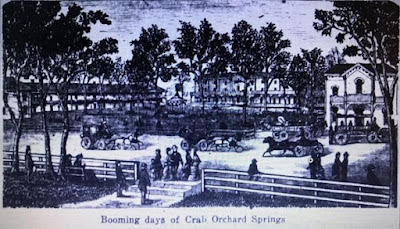
The extravagant praise heaped on J.W. James can seem puzzling.  Here was a man who ignored his Baptist heritage by making and selling whiskey.  Moreover, he based his operation near the spa at Crab Orchard Springs where many “people who indulge in strong alcoholic drink” retreated to free themselves of the addiction to liquor,  Finally, finding a loophole in the law that forbade sales of alcohol in an adjoining county, James took full advantage of exploiting the opening.  Should we take seriously this testimonial?  


The answer lies in Willie James’ generosity.  According to his eulogist:  “His place here can never be supplied. His fortune was ample, his cash capital in the thousands, and his pockets always full to meet the demands of the borrower and the beggar…. He gave more to preachers, churches, Sunday schools, Christmas trees, and to feed and clothe the poor, than any other man in Lincoln County.”


A specific example was provided to illustrate James’ character.  “On one occasion, a poor destitute man, (William Kidd) with a withered arm, passing James’ place of business with an empty meal sack on his shoulder, and a coffee-sack in which he had three hens, the only property he had in the world, stopped in to warm. Willie said…How are times with you? [Kidd] Might hard. I have in my coffee-sack my only three hens. The only things I have in the world. I am taking them to the store to buy me some meal and coffee. [James] Look here at this paper and see what your hens are worth in the market – 68 cents a piece. Take them back home to lay you some eggs, and take this dollar to buy you some coffee and meat, and take your meal sack up to my miller and tell him to fill it as full of meal as he can tie it.”

            *****

John Francis Callahan, through the sale of liquor, rose in wealth and attained community recognition for his charitable and civic contributions in Boston, his home town.   Callahan’s career culminated in his appointment as a Director of Public Institutions for the city, responsible for managing the feeding and shelter of Boston’s poor, a population he knew all too well.


The son of impoverished Irish immigrants himself, Callahan received six years of education in Boston schools before being forced at 12 to go to work to help support his family.  His initial employment was in a local grocery store that featured wines and liquor.  He rapidly understood the profitability of spirits and had an aptitude for the whiskey trade.  By March 1879, he had opened a wholesale and retail liquor store in Boston.  He called it John F. Callahan & Co. “Walkhill Whiskey” was his flagship brand. The 27-year old’s rapid business success brought him considerable attention in business and political circles.


After serving four years as treasurer of the Irish Charitable Society, a major force in assisting indigent Irish residents of Boston, Callahan’s combination of Democratic Party ties and charitable work resulted in his being appointed a Director of Public Institutions for Boston, among nine men charged with overseeing the operations of Boston’s public institutions involving the poor.  


Those institutions included the almshouse,  the structure shown above on Deer Island, actually a promontory jutting into Boston Harbor. Opened in 1853, the almshouse was administered for decades by the City of Boston to provide shelter for indigent adults and children.  Callahan also had responsibilities for the Marcella-Street Home. That Boston institution housed orphaned or “street” boys, and later also girls, following a court hearing that determined the children were without adult support or supervision. 


Following his term Callahan throughout his life continued to be active in civic and philanthropic causes.  This “whiskey man” who rose from poverty and a childhood at labor to supervising Boston’s care for the poor deserves a final tribute.  One occurs in the volume, “One Thousand Representative Men Resident in the Commonwealth of Massachusetts” (1899). The author has this to say:  “…Mr. Callahan stands foremost among the Irish-American sons of the old Bay State.”


Note:  Each of these three philanthropic whiskey men are treated at greater length in separate posts on this website.  Thomas Sherley, October 24, 2021;  John W. James, November 2, 2021; John F. Callahan, January 4, 2021.


E. M. Rusha: Yankee Whiskey Man with Southern Ways

 When Edward Morris “E.M.” Rusha arrived in New Orleans in 1825 as a precocious 14-year-old, his Philadelphia accent must have marked him apart from the general Creole-speaking population of the city.  During the ensuing half century in the “Big Easy” as a major wine and liquor dealer, Rusha adopted, if not the patois, the mores of his adopted Southern town. They included engaging in the slave trade and supporting the Confederacy.  Nonetheless, he emerged from the Civil War a wealthy man.

Born in Philadelphia in 1811, Rusha even as a teenager had shown an adventurous personality.  Why he chose New Orleans, some 1,200 miles from his birthplace is unclear.  He apparently quickly found employment there and adapted readily to his new environment.  When his father died not long after he left home, Rusha saved sufficient money to bring his mother to New Orleans and give her a home with him. 


Two years later, at age 22,  Rusha would have sufficient savings to open a wholesale liquor house at 54-58 Girod Street between Tchoupitoulas and Commerce Streets.  Shown here in a drawing the store was an impressive three-story building.  He advertised widely as “E.M. Rusha, Importer of Foreign Wines and Liquors and Dealer in Domestic Spirits.”   He seems to have enjoyed rapid success.  The local press frequently reported that a shipment of 50, 80 or 100 barrels of whiskey were on their way to him aboard steamships like the S. S. Le Compte, shown here.


Four years after opening his business, Rusha, now 26, marrried a local woman, Mary Ann Sherman.  Over the several decades the couple would have a large family, given in genealogical sites variously as 11 to 14 children.  As they reached maturity Rusha would put them to work in the store, stocking shelves and waiting on customers.  


An elderly slave 

As he enjoyed success in New Orleans the Yankee businessman was embracing Southern ways.  In  November 1850 he ran an ad in the New Orleans Crescent newspaper offering thisFor Sale” notice:  “An old Negro Woman, a good Cook and Washer, to a good master will be sold at a bargain. Apply to E.M. Rusha, 24 Girod Street.”  The ad gives no clue about whether the black slave woman had been employed in his household or whether he had acquired her in payment of a debt.  New Orleans was a premier center for the slave traffic. Rusha’s ad tacitly admits that elderly slaves, like the one pictured here, had little market value.  Rusha suggests that reality by offering her “at a bargain” to “a good master” — as if he would have any say about her treatment after the sale.


The 1850s decade was one of continuing prosperity for Rusha as he expanded his activities into other business ventures, including buying and selling land and acting as a cotton broker, lucrative pursuits fueled by his liquor profits.  In the national census of 1860, he reported owning $50,000 in real estate and personal estate value of $20,000, the total equivalent of roughly $2.7 million today.  Recognized as a local leader, by 1855 he had been appointed to the civic committee that  that regulated the New Orleans Work House and Prison, the latter shown above.


Rusha’s world changed radically with the dawning of the 1860s and the advent of the Civil War.  Now a thoroughgoing Southerner, Rusha was strongly for the Rebellion.  His son, Edward Jr., apparently with his father’s blessing, was an early volunteer, joining the Louisiana Regiment Fifth Infantry as a corporal in Company E. in June 1861 and stationed at Camp Moore. As befell many new recruits, young Edward soon was stricken by disease, probably malaria, and given an honorable discharge for ”sickness” by October.  Rusha himself held the rank of 2nd Lieutenant in the Louisiana Militia but saw no action.


General Butle

The Confederacy held New Orleans for more than a year after the war began during which period Rusha was forced to close down his cotton brokerage but continued to sell liquor.  In April 1862, however, New Orleans fell to Yankee forces, the Louisiana State flag was removed, and for the remainder of the conflict the city was under Federal military control.  Although an advocate of coffee for his troops,  Gen. Benjamin Butler, and his successors as military governor, understood that the occupying troops would be discontented without stronger beverages.  They allowed liquor sales, with controls, to continue.


Rusha was willing to play along.  Generally unable to access pre-war “wines, liquors and domestic spirits,” he turned to fabricating his own alcohol-laced medicinal, calling it “Dr. DeAndries Pure Sarsaparilla Bitters.”  Introducing the nostrum during wartime 1863,  Russa advertised it vigorously with claims that his bitters were “the best Preventative for Health ever introduced into this Country.  As a general drink they are exhilarating; they give tone to the stomach, being free from all impurities.”   Additionally, in ads he claimed his medicinal was “purely vegetable” apparently counting corn in liquid form as part of that food group.  This “Reb” even went so far as to hint in an ad aimed at his New Orleans occupiers that General Grant regarded Dr. DeAndries Bitters as preventing cholera, an ever-present threat in those days.  As shown here, the nostrum was sold in amber bottles.


Despite the postwar absence of Union troops that had created a thirsty customer base, Rusha survived the financial woes that plagued the South.  Although New Orleans was subject to the unrest and economic stresses of the Reconstruction Era, the city remained an important  port on the Gulf of Mexico.  E. M. Rusha’s liquor house lived on almost two decades following the war.  It disappeared from business directories after 1883 when its 72-year old proprietor apparently retired.


Odd Fellows Emblem

Although Rusha seems not to have had any compunctions about selling slaves or siding with the Confederacy or making dubious claims about the health benefits of his bitters, as he aged he apparently had a moral dilemma about his membership in a fraternal organization called the International Order of Odd Fellows (IOOF).  As an upward ambitious young man trying to establish himself in an alien society, Rusha had joined the semi-secret organization and worked his way through the ranks to becoming New Orleans “Grand Master” by 1868.


Although membership proved commercially and socially advantageous to Rusha, it had its downside.  His wife, Mary Ann was a Catholic and the couple had been married in a Catholic church.  Under canon law, Catholics were forbidden to join organizations that were held to be heretical.  The Odd Fellows, founded in England and brought to America in 1819, was a quasi-religious society with its own priests, altars, ritual worship and funeral ceremonies.  As a result, the IOOF was among the proscribed.  


No record exists about the tensions that the IOOF might have caused Rusha in his home life.  After the early deaths of three of his children and in 1890, of Mary Ann, his wife of 53 years, Rusha apparently had a crisis of conscience about his membership.  After consulting with Catholic clergy, in 1891 he renounced his ties to the organization and became a Catholic.  By then of advanced age himself Rusha already had suffered two strokes.  According to press accounts he was in discussion with a Catholic priest in August 1893 when a third stroke took his life.


Given the last rites of the Church and a funeral Mass, Rusha, age 82, was buried  in an above ground crypt in the historic Lafayette Cemetery.  He lies next to Mary Ann and other family members, as shown below.  An obituary in a local newspaper, commenting on Rusha’s having lived in New Orleans for 71 years, noted:  “During that long period he proved himself a worthy and exemplary citizen.”  To which I would add:  But not immune from controversy then and now.


Note:  This post would not have been possible without the cooperation of Ferd Meyer, former president of the Federation of Historical Bottle Collectors, whose Peachridge Glass website has documented so well the lives and achievements of the men and women behind the production of “medicinal” bitters and their containers.  Relying on Ferd’s post of February 19, 2019 for references and illustrations, together with my own research, I have tried to put Ed Rusha’s life into the historical context of New Orleans during the 1800s.


E. G. Lyons Was Frisco’s “French Connection”

 Known in its early days as the “Paris of the Pacific,” San Francisco by 1852 boasted a population of at least 6,000 French immigrants, said to be the largest single foreign contingent in the burgeoning city until the Chinese arrived to build the railroads.  Among the French population was Paris-born Ernest Gabriel “E.G.” Lyons. Shown here, Lyons was destined to be remembered for his assistance to the French community while operating a thriving liquor and wine house, an enterprise that endured for years after his death. 

The tide of French immigration to America resulted from a period in France that brought political turmoil, strikes, riots and high unemployment.  That instability, along with the lure of gold, convinced French by the thousands to head for California.  Among them were Hughes and Amelie Lyons who brought their 18-year old son Ernest with them.  In 1852 Hughes went into the wine and liquor business in Sonora, a boom town during the Gold Rush.  For the next  decade, Ernest would work side by side with his father, learning the liquor trade.  With Hughes’ death in 1861, amid a downturn in Sonoran mining activity, Ernest Lyons moved to San Francisco, below, his home for the rest  of his life.


During this period, Ernest also found time to marry.  In San Francisco he met and in 1862 wed Emilia Buser, a local girl of French ancestry.  He was 28 at the time of their nuptials, Emilia was 19.  The couple would produce a family of seven children.  Emilia is shown here later in life in a passport photo. 


Lyons’ sister was already in San Francisco, married to Jules Mayer, aka “Hayes.” The two men went into business together in an enterprise called E.G. Lyons & Company.  In 1865 the partners bought out Crevolin and Company, a French-owned wholesale dealership in wines and liquors located at 510 Jackson Street.  Lyons’ newspaper ads included a message from the Crevolins recommending the new ownership.  The building would be Lyons’ headquarters for the next 36 years.


As shown above, Lyons advertised his firm as liquor merchants. Its whiskey brands, neither trademarked, were “Pacific Club” and “Walnutine.”  Increasingly, however, company marketing was directed toward selling bitters.  One 1865 ad  featured no fewer than seven brands of bitters.  Of greatest importance to Lyons and his partner was their own label — Lyons’ Celebrated Stomach Bitters — advertised as: “A certain cure for dyspepsia, liver complaint, fever, and ague [malaria],  and all kinds of periodical disorders; a means of immediate relief in flux colitis and choleric maladies….”  This nostrum was sold in distinctive four sided bottles as shown below.


As the Lyons Company grew and expanded, Ernest was gaining a reputation among the French population for the helping hand he willingly held out his countrymen.  Among them were the French-born Sainsevain Brothers, Pierre and Kean Louis.  They had purchased the El Aliso vineyard in Los Angeles and immediately proceeded to expand its operations.  In 1857 they opened a store in San Francisco, and by 1858 they led the state with a production of 125,000 gallons of wine and brandy.


Among their customers was Lyons who sold wine under the “Belvista” brand and claimed to have trademarked it.  The colorful label featured the “Entrance to the Golden Gate” showing a masted schooner entering San Francisco harbor at sunset years before the famed bridge was built to the far shore.  The relationship with the Sainsevains reached fruition in January 1874 when the vintners gave exclusive rights to Lyons to bottle and merchandise Sainsevain’s Wine Bitters.  Lyons marketed this product from his Jackson Street headquarters under the name of Pioneer California Wine Depot.


Under Lyons’ guiding hand his business grew and prospered for some 28 years, making him one of San Francisco’s wealthiest men.  He never forgot his roots and became a prominent  figure among his fellow French.  At his death in February 1893 at the relatively early age of 59, he was much mourned by his countrymen.


The company Lyons built lived after him another 27 years.  His daughter Ida had married a Frenchman named Joseph C. Raas who became part of Lyons’ management team.  With his brother Andre as secretary, Joseph took over the presidency of the liquor house.  He renamed it E. G. Lyons & Raas and moved to a new address at Folsom and Essex Streets.  The Raases repositioned their brands to emphasize cordials, fruit brandies, cocktails, wines and juices.  Gone was company advertising for bitters and most brands of “hard” liquor.


The Raas brothers apparently saw that National Prohibition was coming.  When the ax fell in 1920, they seemingly made a quick and seamless switch to become the Lyons Cal Glace’ Fruit Company, said at the time to be the world’s largest enterprise dealing in candied fruit products.  Thus was the legacy of Ernest Lyons carried forward “sweetly” into the ensuing 14 year ban on alcohol in America.


Notes:  This post was composed by referencing a number of Internet sources, among them an undated post by Warren Friedrich on Lyons bottles and material provided by Ferd Myers to the Virtual Museum of the Federation of Historical Bottle Collectors (FOHBC).  Those sources have been supplemented by data from ancestry.com.


Scroll to Top